Story
Sanctuary AI's bet isn't really about humanoid hardware. It's about the cognitive architecture — the company's internally named "Carbon" stack — and the company has been more open than most about the fact that the body is in service of the software, not the other way around.
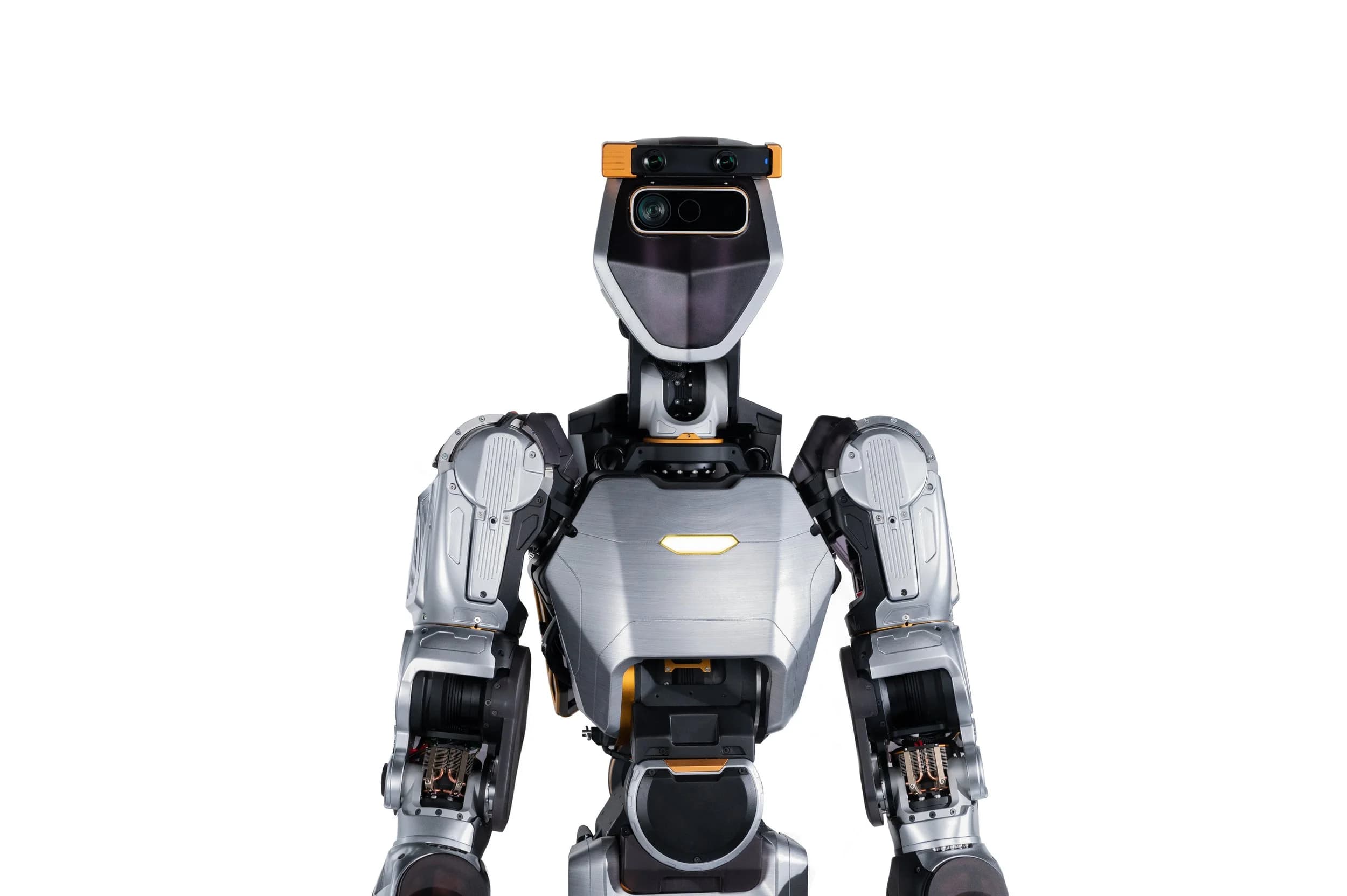
Phoenix has appeared in a number of staged demonstrations: stocking retail shelves, packing warehouse totes, performing simple manipulation tasks. The footage is competent and unflashy. There is also Magna International, the auto-parts giant that is a strategic investor and pilot/manufacturing partner. In May 2026, Sanctuary AI said it had presented an eighth-generation Phoenix optimized for high-quality data capture, and also said Zeon invested and partnered on specialized materials for dexterous robotics. In June 2026, Sanctuary reported 99.5%+ success at a 2.54-second cycle time on a wire-plugging production task with a global Tier 1 automotive supplier as part of a broader Physical AI / industrial-robotics strategy. That is useful context for Sanctuary's roadmap, but it is not direct proof of Phoenix humanoid deployment, humanoid autonomy, production volume, or independent field reliability.
The Reality Score is weighed down by a thin commercial pipeline and the fact that AGI-class framing pulls the conversation away from the kind of concrete metrics the rubric is designed to reward. Sanctuary has published some baseline Phoenix launch specifications, but not the richer spec-sheet depth or field-performance data the rubric rewards. If Sanctuary lands a second non-Magna customer or publishes fuller public specs, the trajectory changes fast.
Reality check
Phoenix is unusual — Sanctuary's bet is that the cognitive stack ("Carbon") is the moat, not the chassis. Sanctuary does not publish a detailed spec sheet for the robot itself.
- Magna International is a strategic investor and pilot/manufacturing partner
- Sanctuary AI says Zeon is an investor and materials-development partner focused on specialized materials for dexterous robotics
- Sanctuary AI presented an eighth-generation Phoenix robot in May 2026 and said the generation is optimized for high-quality data capture
- Sanctuary AI announced in June 2026 that its Physical AI achieved a 99.5%+ task success rate at a 2.54-second cycle time on a complex wire-plugging production task with a global Tier 1 automotive supplier, validated against the customer's live production benchmarks
- Phoenix has been demonstrated performing retail and warehouse manipulation tasks
- Sanctuary publishes regular research on its Carbon cognitive stack
- AGI-adjacent positioning pulls the conversation away from the concrete capability metrics the rubric is designed to reward
- Detailed hardware specifications (height, weight, payload, DoF) are not on Sanctuary's public website
- The Zeon announcement is an investment and materials-development signal, not a Phoenix customer deployment, public spec sheet, autonomy, or field-reliability proof
- Sanctuary's Generation 8 announcement is official robot-iteration and data-capture-roadmap evidence, not proof of external customer deployment, autonomy level, production volume, or independent performance metrics
- The June 2026 wire-plugging metric is official Sanctuary AI/manufacturer-reported and appears to involve industrial robotic systems rather than proof of Phoenix humanoid deployment, humanoid autonomy, production volume, or independent field reliability